Global health can seem like a broad topic that could be overlooked but is an issue that is crucial. It affects human beings each and every day. I have personally witnessed the effects that extreme poverty, lack of education, disease, and childhood mortality have on a country and its people. Global health is the study and research of improving health worldwide. It is of utmost importance that we as fellow human beings begin to realize the importance and severity of these issues while realizing that there is still hope. Intervention can and must be implemented to improve suffering, decrease disease, and save lives.
A new mother comforted by her own mother soon after delivery

Several statistics truly struck my heart as to the state of this world and its people. In 2015, more than 16,000 children under the age of five years old died daily (Seal, 2008). The majority of these deaths are preventable with access to interventions like clean water, medical equipment, and affordable medication. Also in 2015 it was found that 10,814 people died daily from HIV and Aids, and 5,482 people died daily from diarrheal diseases. It appears that most preventable diseases prevalent in low resource countries are mostly neglected and little effort has been put forth to solve the problems. In 2018 it was found that forty five percent of all child deaths worldwide are tied to a severe lack of nutrition (Paulson, 2014). One in three children in impoverished countries suffer from this chronic malnutrition. Their families are powerless because of their lack of access to clean water, nutritional food, or medical care. This issue goes hand in hand with education which is essential for the prevention of disease mortality and life and cannot be compromised. Ninety one percent of children in primary school in lower resource countries will not achieve minimum competence levels in reading and 247 million children worldwide are not learning basic skills to lead healthy lives (2019). Education is crucial for health improvement and its improvement directly relates to a decrease of HIV and AIDS as well as lower maternal mortality rate, higher survival rates for children, and a myriad of others.
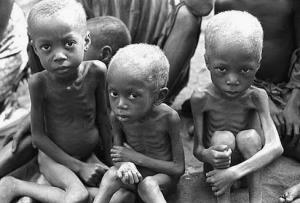
Malnourished children in Africa, a common sight
There are countless reasons that global health should remain in the spotlight and at the forefront of people’s minds, yet information without action means nothing. While there are people working to improve health in lower resource countries there is much room for development of bigger and better systems and programs. I hope these statistics strike you as much as they have struck me! Over the weeks ahead we will analyze in depth these important issues and their relevance to global health and its beneficial growth.
Works Cited:
Bertozzi, Stefano. “HIV/AIDS Prevention and Treatment.” Disease Control Priorities in Developing Countries. 2nd Edition., U.S. National Library of Medicine, 1 Jan. 1970, www.ncbi.nlm.nih.gov/books/NBK11782/.
Education data. (2019, October 2). Retrieved from https://www.globalpartnership.org/data-and- results/education-data.
Paulson, T. (2014, March 19). The cure for global poverty: Health. Retrieved from http://www.humanosphere.org/basics/2014/03/the-cure-for-global-poverty-health/.
Seal, R. (2008, September 27). Why are mothers still dying in childbirth? Retrieved fromhttps://www.theguardian.com/world/2008/sep/28/sierraleone.internationalaidanddevelopment.



 The State of Global Health